
Returning from IBC2026 in Amsterdam, it is clear that the transition to IP video distribution is taking a leap when it comes to remote production. The talk is less about specific hardware components and more about finding the right way of managing entire production systems using software-defined solutions and hybrid workflows.
Increased focus on managing and engineering
The complexity of broadcasting has shifted from the arena to the network with an increased need for proper engineering and monitoring. This was reflected in the discussions we had at our stand, where visitors could explore comprehensive routing solutions for managing live feeds from a variety of sources, one of the challenges in today’s complex hybrid environments.
Another area of interest at IBC was path redundancy to secure broadcast consistency and reliability when scaling over IP. This was also a topic in the recent NewscastStudio (NCS) roundtable about the evolving workflows of live production, with findings that the trade-off between speed and stability over the public internet remains a primary engineering challenge. As stable transmission is, and has always been, a key pillar in Intinor technology, our Product Owner Peder Boberg contributed to the roundtable from Intinor’s perspective:
“The biggest lesson is that the public internet is a fully viable option for primary sports contribution if you manage the traffic right. Relying on a single network provider is simply a single point of failure during a live broadcast. Real operational security comes from using transport protocols with network bonding to tie multiple cellular and fixed networks together, ensuring that the video stream remains stable even if an individual connection fails.”
Read all insights from the roundtable discussions in the NCS article series.
Bridging SDI to IP at the Intinor Stand
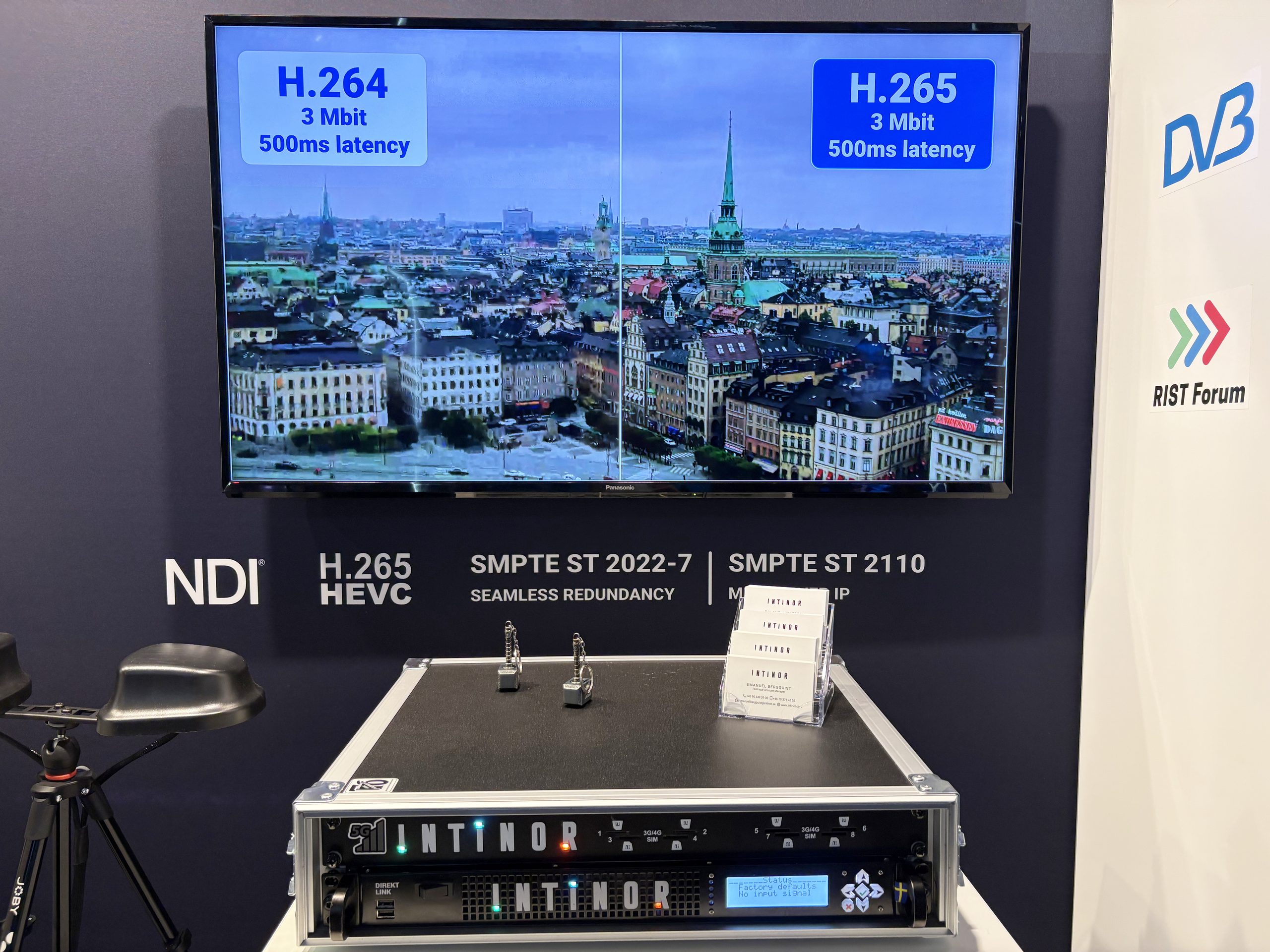
At IBC 2026, our primary focus was demonstrating a practical path for broadcasters when transitioning to IP. We showed our upcoming SMPTE ST 2110 output capabilities for the Direkt router, which allow engineering teams to ingest compressed IP contribution streams from the field directly into uncompressed production networks. Another new feature is DVB-compliant HEVC, offering the possibility to save bitrate without sacrificing quality and interoperability. We also demonstrated additional NDI® advanced configurations in the IDM interface, giving engineers more precise control when routing over NDI®.


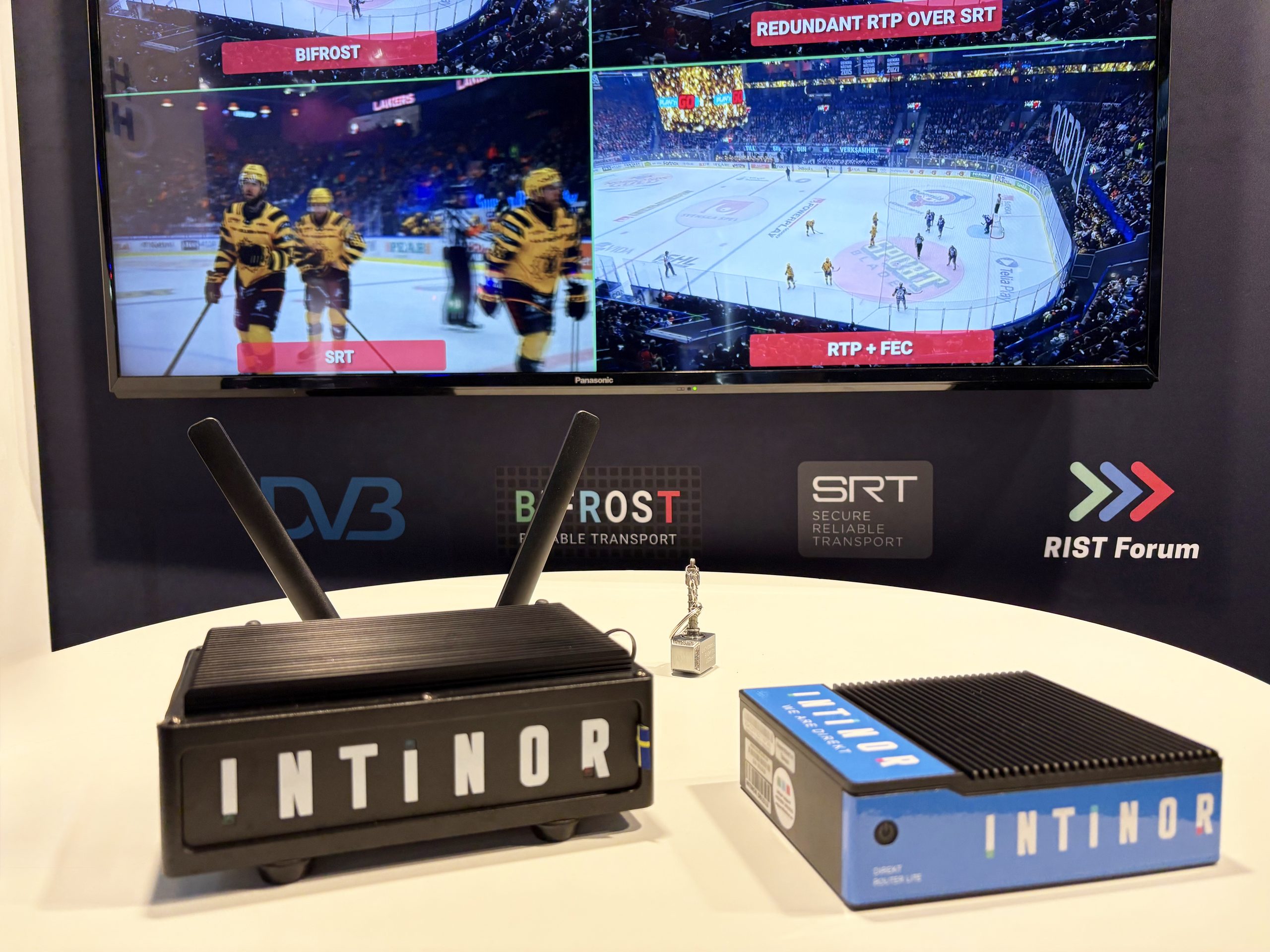
Visitors looking for redundancy solutions could explore our proprietary Bifrost™ Reliable Transport protocol, providing stream stability over internet connections by combining network bonding, Forward Error Correction (FEC) and ARQ retransmission. Bifrost also features intelligent data cost management, ensuring expensive cellular data is only engaged as an automated failover to primary fixed connections without risking stream quality.
We summarize a great show in Amsterdam, taking with us numerous insights from constructive conversations at the stand and valuable customer feedback regarding the operational challenges of bridging public links with internal infrastructure.
What’s next
Looking ahead, we continue our focus on reliable transmission and multi-vendor interoperability in the Direkt platform. The coming updates will introduce additional SMPTE ST 2110 features to our “Swedish Army Knife” of IP video gateways, to further support our customers’ transition to IP-based workflows.
In this IAMT interview you can listen to our Product Owner Peder Boberg talking about the latest features and the next steps in our roadmap.
To learn more about how Intinor can support your needs, contact our engineering team to discuss your architecture and distribution setup.